

Music archaeology
The book is now out and available on the market. The response so far has been overwhelming! Thanks to all who contributed to the book, and to those who came to the book launch of the Historical Museum in Oslo. It was a success, with a lot of people attending. It became a memorable evening,…
My book, Jordas skjulte toner. Musikk og instrumenter fra steinalder til vikingtid (“The Earth’s Hidden Tones. Music and Instruments from the Stone Age to the Viking Age”) is now in print. It arrives directly to the launch, Thursday 13 November at 19.00 at the Museum of Cultural History in Oslo. Stefan Hagel from Vienna will…

I forbindelse med boka mi, Jordas skjulte toner. Musikk og instrumenter fra steinalder til vikingtid (som blir lansert 13. november på Kulturhistorisk museum i Oslo) har jeg vært med i to radioprogrammer, begge i NRK P2. Først i Museum, med klokkesteiner som tema, og så Spillerom, med et videre utgangspunkt. I Museum, som ble sendt…
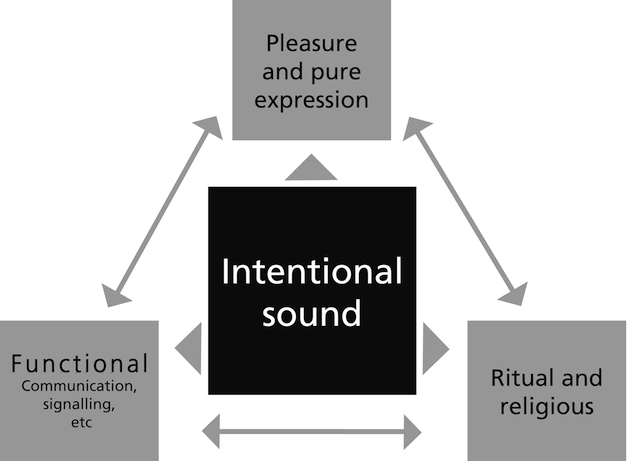
What significance did various kinds of sound have for people in the distant past? How can we approach this question today? My article “Classification of Sound, Sound Tools, and Soundscapes” discusses some issues of sound, meaning and classification. It is based on a paper given at XII Nordic Theoretical Archaeology Group meeting in Oulu, Finland,…
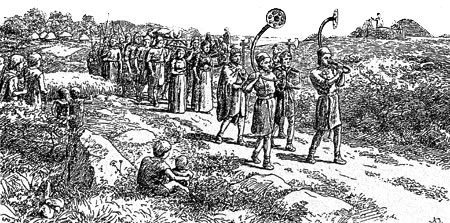
The magnificent lurs of the Scandinavian Bronze Age have got a lot of attention from archaeologists as well as musicologists, since their discovery in the end of the 18th century and onwards. My contribution to this research tradition is the article “The Ritual Significance of the Scandinavian Bronze Age Lurs: An Examination Based on Ethnographic…

Norwegian: 2013-utgaven av årboka Hardanger er nå ute på markedet. Der finner du blant annet en artikkel om klokkesteinen ved Aga, skrevet av Jarle K. Øvrehus og meg selv. Det er en stor steinblokk som står i Klokkesteinviki, nedenfor Agatunet i Ullensvang kommune. Steinen har virkelig en malmfull klang. Og den har en rekke store skålgroper,…
What is understood as old and early music is highly relative. It may be medieval music, baroque music or early rock music from the Fifties. But if you are interested in the really old music, prior to the periods of the established history of music, you should go to archaeology. Music archaeology is an interdisciplinary…
The jew’s harp was one of the most popular instruments in the last millennium. Old lexical truths telling about Vikings, Saxons and Romans playing the jew’s harp are left. These are among the results of my research on jew’s harps. During a period of about ten years I worked with jew’s harps from archaeological contexts.…