

Music archaeology

In cooperation with Linnaeus University I have initiated an international symposium in honour of the acclaimed Swedish music archaeologist Cajsa S. Lund. It will take place in the University campus in Växjö the 18th and 19th of February 2016. We have invited speakers from several European countries. Keynote speaker will be Iain Morley, University of…

During last week’s meeting at ICTMs Study on Music Archaeology (Biskupin, Poland) Polish researchers presented what appears to be the oldest keyed fiddle found. This was the find of a soundboard of an instrument – from excavations in Wolin, at the Baltic coast. The find dates from the period between the end of the twelfth…

This week the 14th symposium of ICTMs Study Group on Music Archaeology is being held in the archaeological museum of Biskupin, a beautiful village north of Poznan. The museum is located at a site with extensive and rich excavations, and holds reconstructed buildings from the Neolithic onwards to the Middle Ages. A perfect place for…
Lørdag kl 1600 blir jeg å høre på elektronikafestivalen Sommerøya i Oslo, med et foredrag om fortidas rytmer. Jeg tar utgangspunkt i det interessante funnet av det om ser ut til å være et 20 000 år gammelt rytmeorkester av mammutbein. Funnet er fra Mezin i Ukraina. Sommerøya blir arrangert på Sukkerbiten, som ligger ytterst…
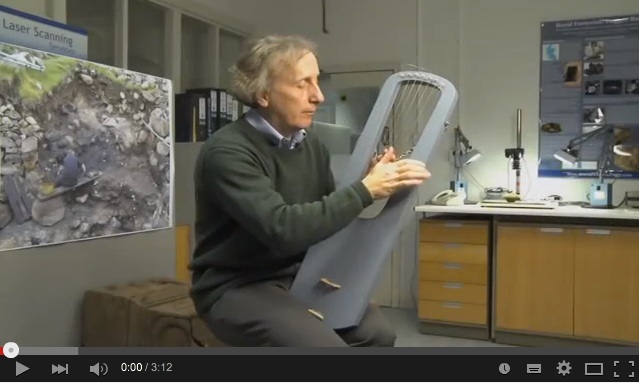
Today is “The day of Archaeology”, which originated in England. In addition to that, Great Britain celebrates the “Festival of Archaeology” (12th to 27th July). For those of us with special interest in archaeological finds of musical artefacts, today is the perfect day to recall one of the most interesting discoveries of recent years: a…
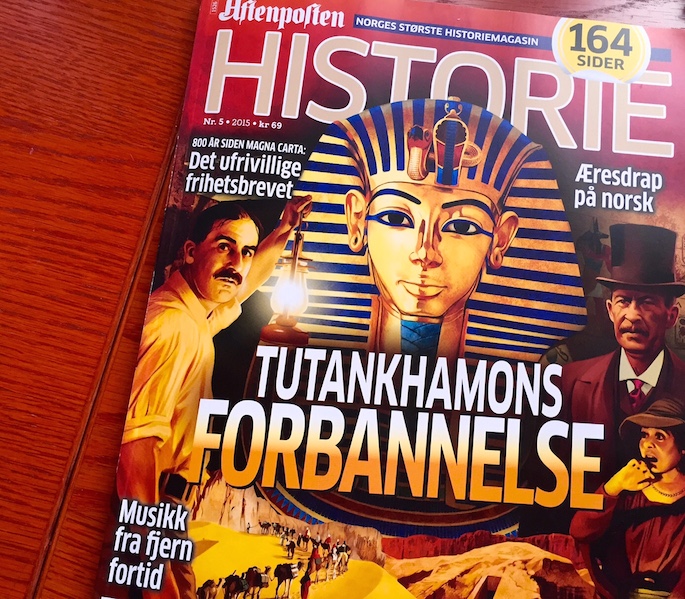
Issue No. 5 of the popular magazine Aftenposten Historie is on sale today. There you will find my article on the earliest history and evolutionary roots of music. The article is accompanied by a lot of illustrations and fills eight pages. I focus on the first archaeological finds of musical instruments in the earliest period…

Yesterday I gave a lecture at the Conservatory of Music in Tianjin. I was invited by my friend Professor Fang Jianjun, who is the leader of the musicology department and also the Vice president of the Conservatory. It was a pleasure, and it and was attended by a lot of interested students and teachers. The…

I have now travelled for some days in the Northern parts of China. In Chifeng (Inner Mongolia) we could not find the jew’s harp we were searching for. Today we suceeded more, at the City Museum of Chaoyang (Liaoning), were we saw two well preserved jew’s harps from the Bronze Age, from the earliest phase…

Today I travel to China to give a lecture at the Tianjin Conservatory of Music – and to look at what seems to be the earliest jew’s harps ever found. The jew’s harps are from excavations in the northern part of the country, in the provinces of Inner Mongolia, Liaoning and Hebei. The oldest finds…
The trombonists Jens Chr. Kloster and Gaute Vikdal has arranged, in collaboration with the bronze caster Peter Jensen in Copenhagen, the reconstruction of two playable bronze lurs. This is the first time anyone in modern times has succeeded in recreating this amazingly advanced craft process. The manufacturing process is called “lost wax method”. One element…