

Lyre from Norum Church
This summer I have worked with instrument building. One of the projects was to build a reconstruction of the lyre from a font in Norum Church, Bohuslän, Sweden. It is dated to the 12th century, and is part of several depictions of Gunnar in the snake pit, found in Scandinavia. This stone carving does not reveal much details, but merely shows the oultline of the instrument. The lyre is placed beneath Gunnar, who in the story is forced to play with his feet because his arms are tied behind his back. (The medieval text sources use the term harpe, not lyre.) 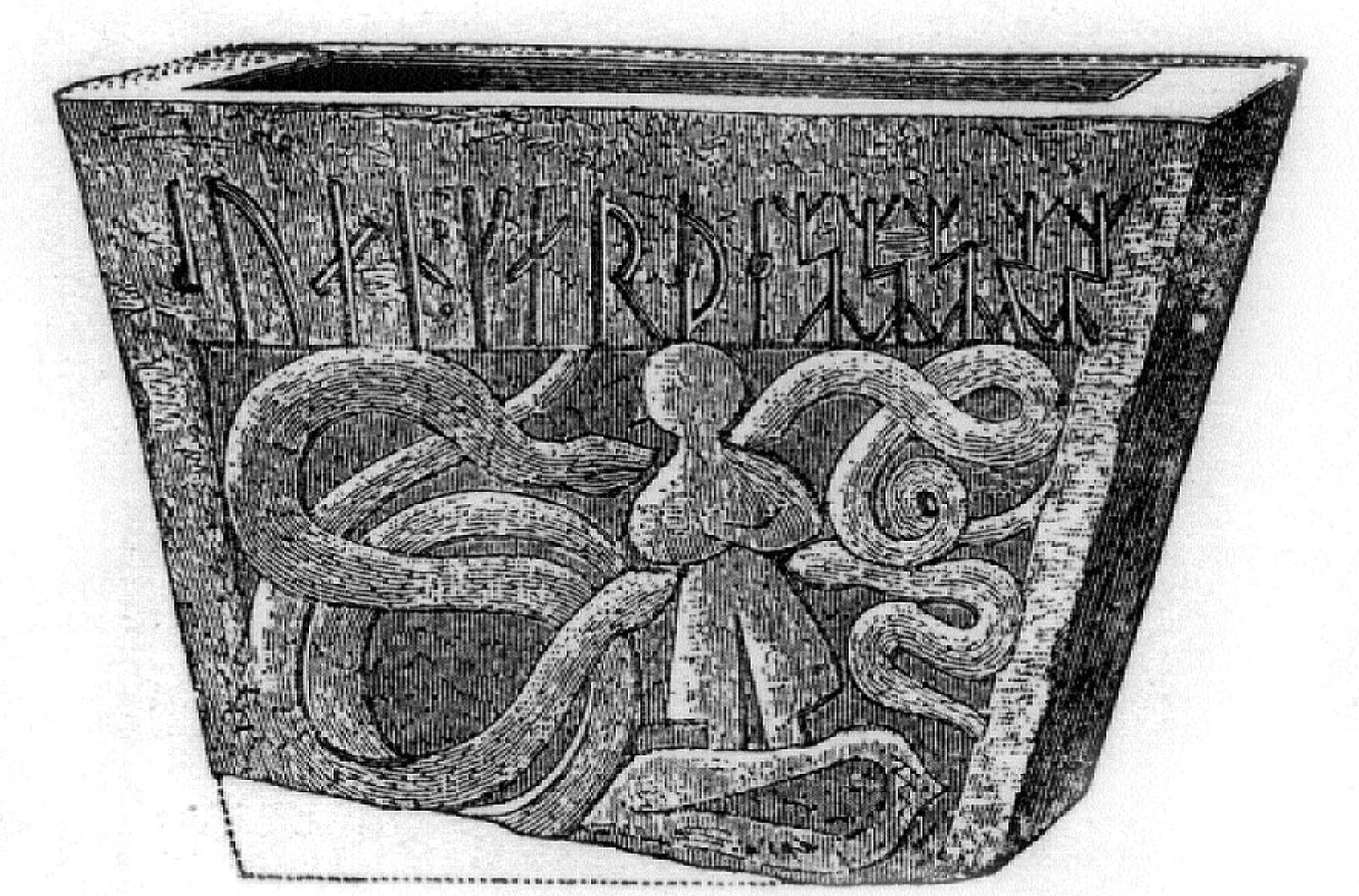 From this carving I have considered how the lyre might have looked like, and built a new one. The lyre is somewhat rounded, and both chronologically and with regard to the shape it connects medieval Norwegian lyres with earlier lyres form the continent and England. I have put seven strings on this instrument, and as usual I use fishing line of nylon. Originally, the instrument was – perhaps – equipped with metal strings?

Norwegian lyres!
Here is a glimpse into my pratical work with lyres. This winter I have worked…
Thoughts on new Norwegian folk music in Finnish journal
In an article published in the Finnish journal Folk och musik I write about new directions…
«Norges lyder» is released and available
What did our forefathers and -mothers hear, in their places, in the countryside and in…
The megaphone from the Kvalsund Ship presented in Barcelona
Earlier this month I participated in the European Association of Archaeologist’s 24th annual meeting, a…
Conference in Austria on Music and Democracy
I spend a few late summer days in Austria, at the conference Participatory Approaches to Music…